


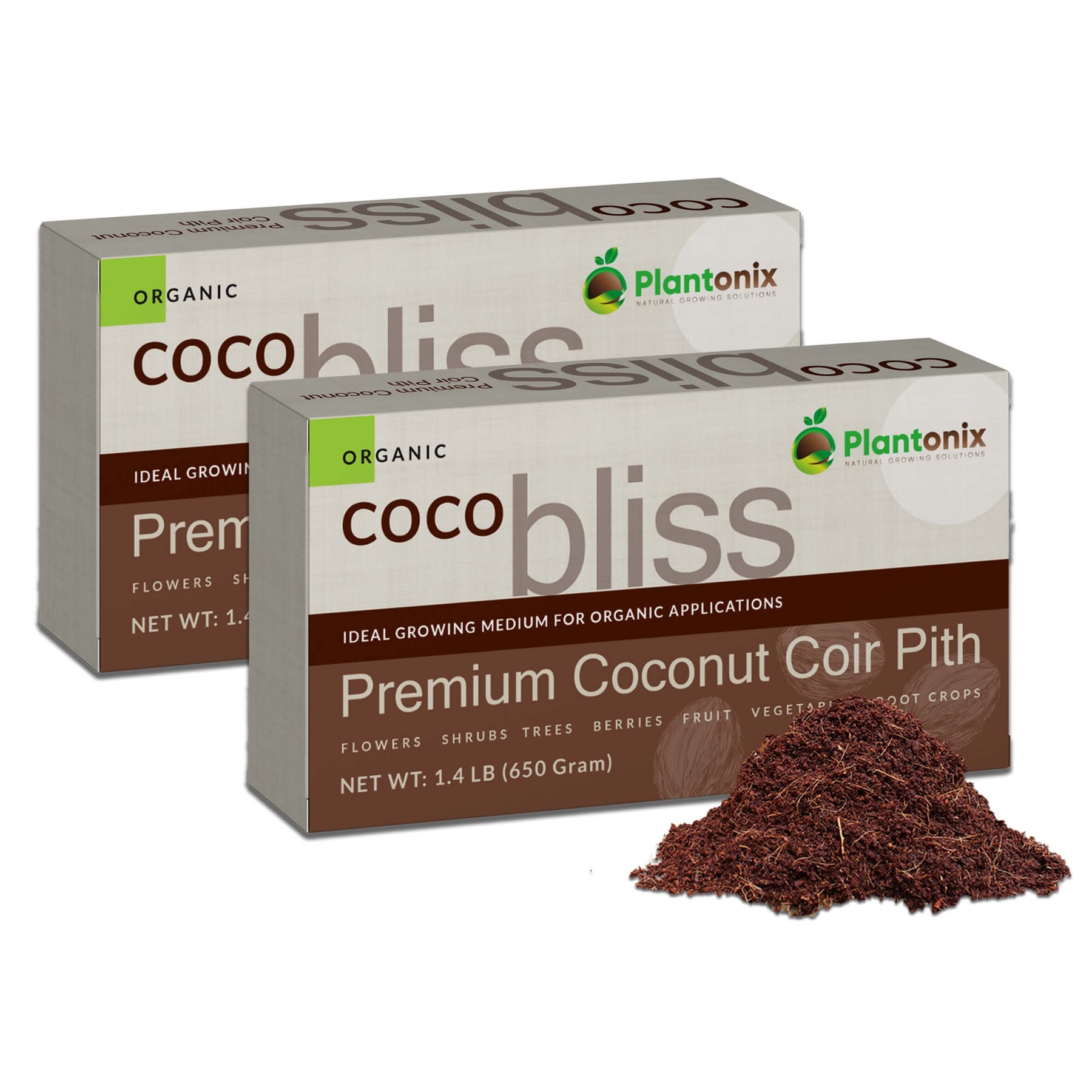
Coco Bliss - 650g Coco Coir Bricks







Coco coir, derived from coconut husks, is a versatile and sustainable plant-growing medium. It comes in various forms such as bricks, fibers, and peat.
Known for its superb water retention and aeration properties, coco coir benefits plants by providing moisture even during dry spells and preventing waterlogging. Its pH neutrality suits a wide range of plants, and its sustainable sourcing supports eco-friendly gardening.
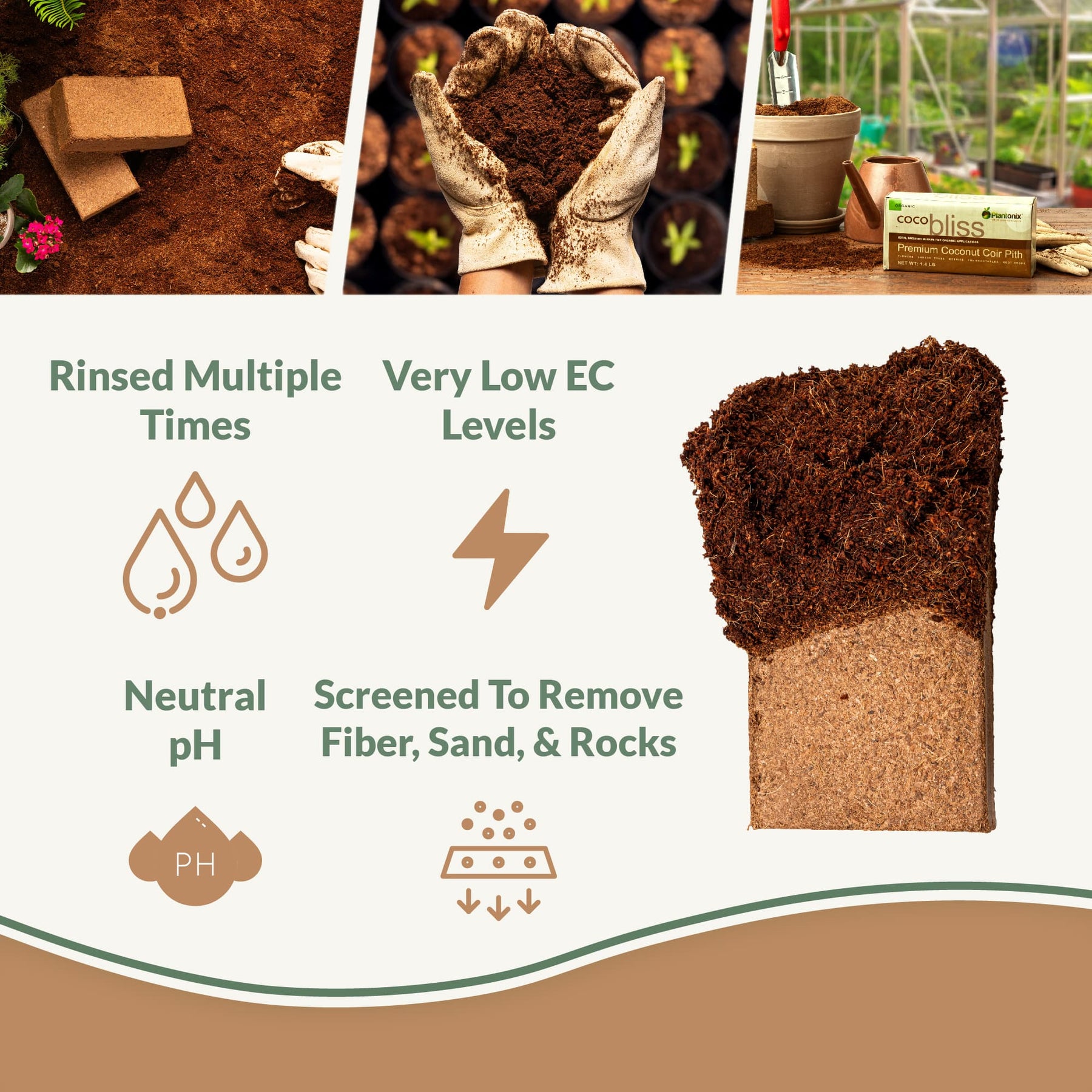
It also has low a EC (Electrical Conductivity) level and a high CEC (Cation Exchange Capacity).
You can read more here and here.
We source our coconuts from various places that are far from the ocean. Typically they would end up in landfills.
After the husk is immersed in water for 6 weeks, the fiber is extracted mechanically, and the pith is left behind stored in heaps to age. After that we sift out rocks and other debris multiple times to insure we have the best consistency.
We then rinse it at least three times in fresh water to remove any excess salt content before compressing it into easy to handle bricks.
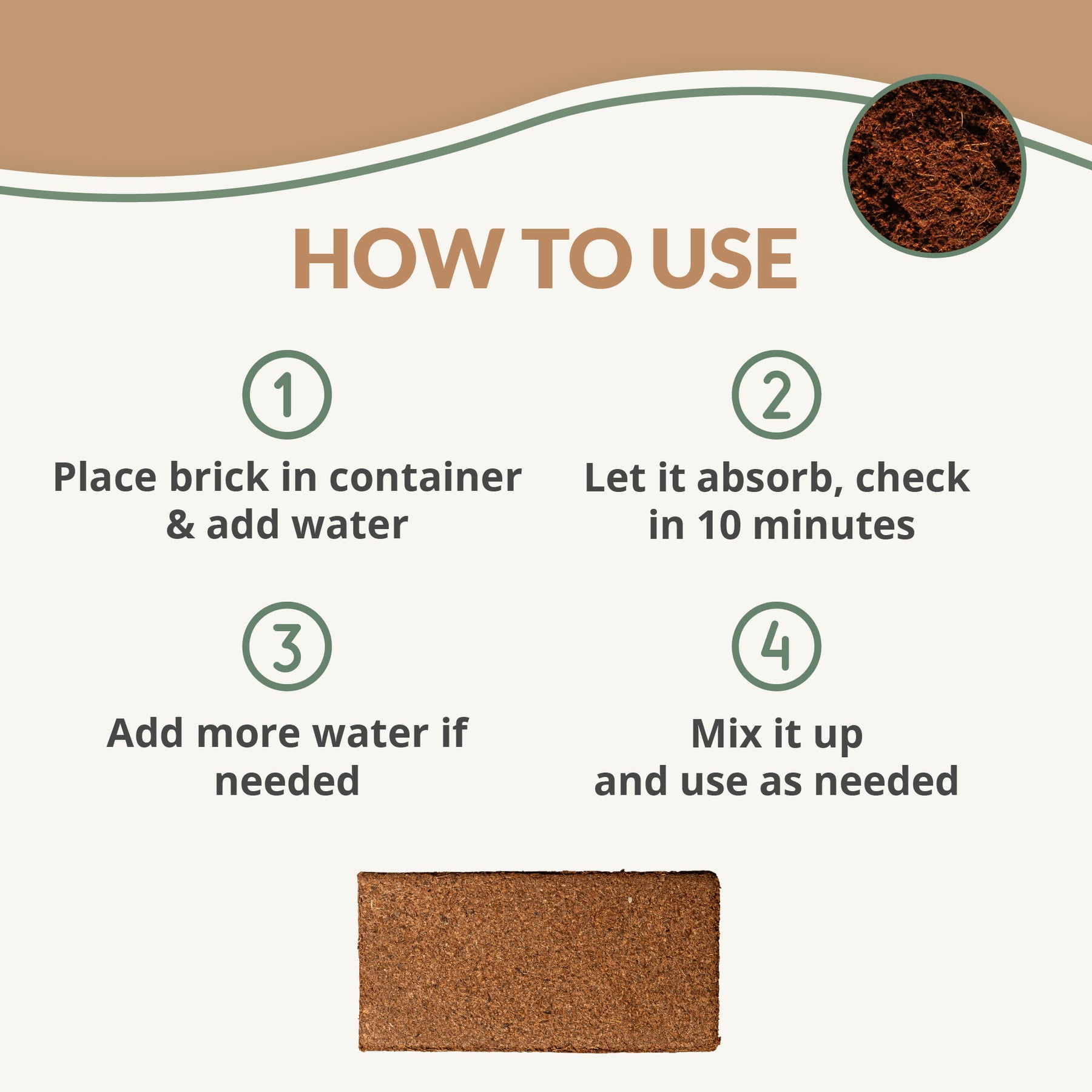
A common ratio for rehydrating coco coir is around 5:1, which means for every 5 parts of water, you would use 1 part of dry coco coir.
However, it's important to add water gradually and observe the expansion of the coir. You want to achieve a fluffy and well-aerated texture, so you may need to adjust the amount of water based on the specific coir you're using and the desired consistency.
Keep in mind that the quality of coco coir and its water retention capacity can vary, so it's a good practice to monitor the expansion and moisture content as you add water to ensure you achieve the right balance for your plants' needs.
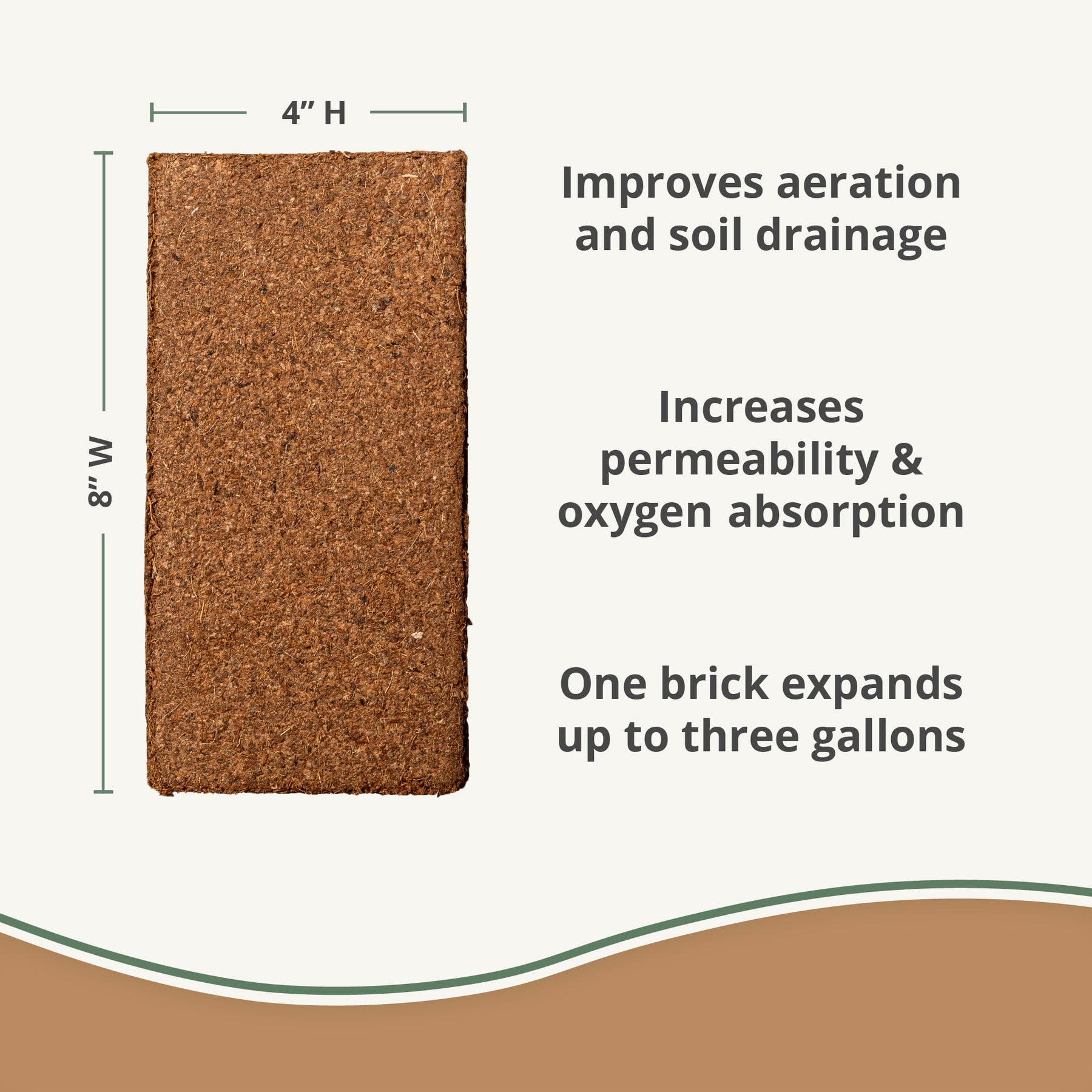
For a 650g brick of coco coir, you might start by adding approximately 3250g (3.25 liters) of water, it could potentially expand to a volume of around 3.25 to 4.55 liters (0.85 to 1.2 gallons) when fully rehydrated, assuming an expansion ratio of 5 to 7.
More FAQ's here.
We ship via USPS, FedEx Home Delivery to residences and via FedEx Ground to businesses. Shipping is assessed using the same method employed by FedEx, based on weight and zone.
Enhance your gardening experience with Plantonix Coco Bliss. Derived from the husks of sustainably sourced coconuts, our premium coco coir is the perfect addition to your garden, hydroponic system, or container plants.
This versatile soil amendment is renowned for its superior water retention, excellent aeration, and efficient drainage properties. Ideal for various gardening applications, coco coir creates an environment that supports root growth by preventing soil compaction and providing consistent moisture.
Whether used alone or mixed with other growing media, Plantonix Coco Bliss coco coir helps create a thriving, sustainable garden.
High Water Retention: Keeps your plants hydrated for longer periods, reducing the frequency of watering.
Excellent Aeration: Provides ample oxygen.
Superior Drainage: Prevents water logging.
Eco-Friendly: Made from renewable coconut husks, making it an environmentally sustainable choice for your garden or growing needs.
Neutral pH: Ideal for a wide range of plants, from vegetables and herbs to flowers and ornamental plants.
High Cation Exchange Capacity (CEC): Coco coir has a high CEC, allowing it to retain and release essential nutrients to plants effectively.
Nutrient Availability: The high CEC of coco coir helps in maintaining a consistent supply of nutrients, reducing the need for frequent fertilization.
Improved Soil Structure: By enhancing nutrient retention, coco coir contributes to better soil structure, supporting robust plant growth.
Reusable: Can be used multiple times with proper care and cleaning.
For Gardens: Mix 1 part coconut coir with 2 parts soil or compost to improve soil texture and moisture retention.
For Potted Plants: Use coconut coir as a soil amendment by mixing 20-30% coir with potting soil.
For Seed Starting: Fill seed trays with moistened coconut coir and plant seeds according to the seed packet instructions.
For Hydroponics: Rinse and soak coconut coir thoroughly before use to remove any excess salts, then use as a growing medium in hydroponic systems.
100% Natural Coconut Coir
Store in a cool, dry place away from direct sunlight. Keep out of reach of children and pets.
This product is intended for use as a soil amendment and growing medium.
Coco Bliss
Premium Coco Coir
Plantonix coco bliss is a premier growing medium and is the best natural alternative to peat moss with a neutral pH.


Low electrical conductivity levels help with nutrient availability.
Higher (CEC) levels will increase available nutrients to plants.
Allows for excellent air space and drainage.

Plantonix coco peat is free from dirt, foreign material and weed seeds. We screen our washed raw material to remove dirt and larger lumps to get a superior texture.
Overall rating: 4.9473686 / 5 from 38 reviews.
Review topics: [].
"Best coir bricks in the market. Gets fluffy without leaving any clumps, like some others I have tried. Perlite and vermiculite are great too."
"I am very pleased with the coco coir bricks. They are so much easier to use than the 10 pound blocks. I was a bit leary to switch from peat moss to coco coir but made the decision solely based on environmental, sustainability reasons. I have found the coco coir to be a much better soil admendment than peat moss. It holds water much better and seems have a positive effect on plant growth especially for container gardening."
"Coir Bricks arrived quickly and as described. Customer service responded to a question immediately. Will buy again."
"I am satisfied with the coco coir, but for unknown reasons this and 2 past years orders of coir were delivered 7-10 days after estimated delivery date. The packages in all 3 orders arrived at Columbus OH regional center promptly and were lost for the aforementioned 7-10 days."
"Thank you!"
"Placed my order and it was promptly sent out by way of usps. As usps does (a lot it seems like) they managed to screw up my delivery and ended up losing my package. I contacted customer service and after verifying that usps had indeed messed up, a replacement shipment is being sent out. Great product and unbeatable customer service. I will be ordering from Plantonix from now on. Very pleased with how they handle their business."
"Great stuff👍"
"Always an excellent product and fast shipping"
"As described, thank you"
"Glad I got the gloss I was looking for. Easy transaction. Very happy"


